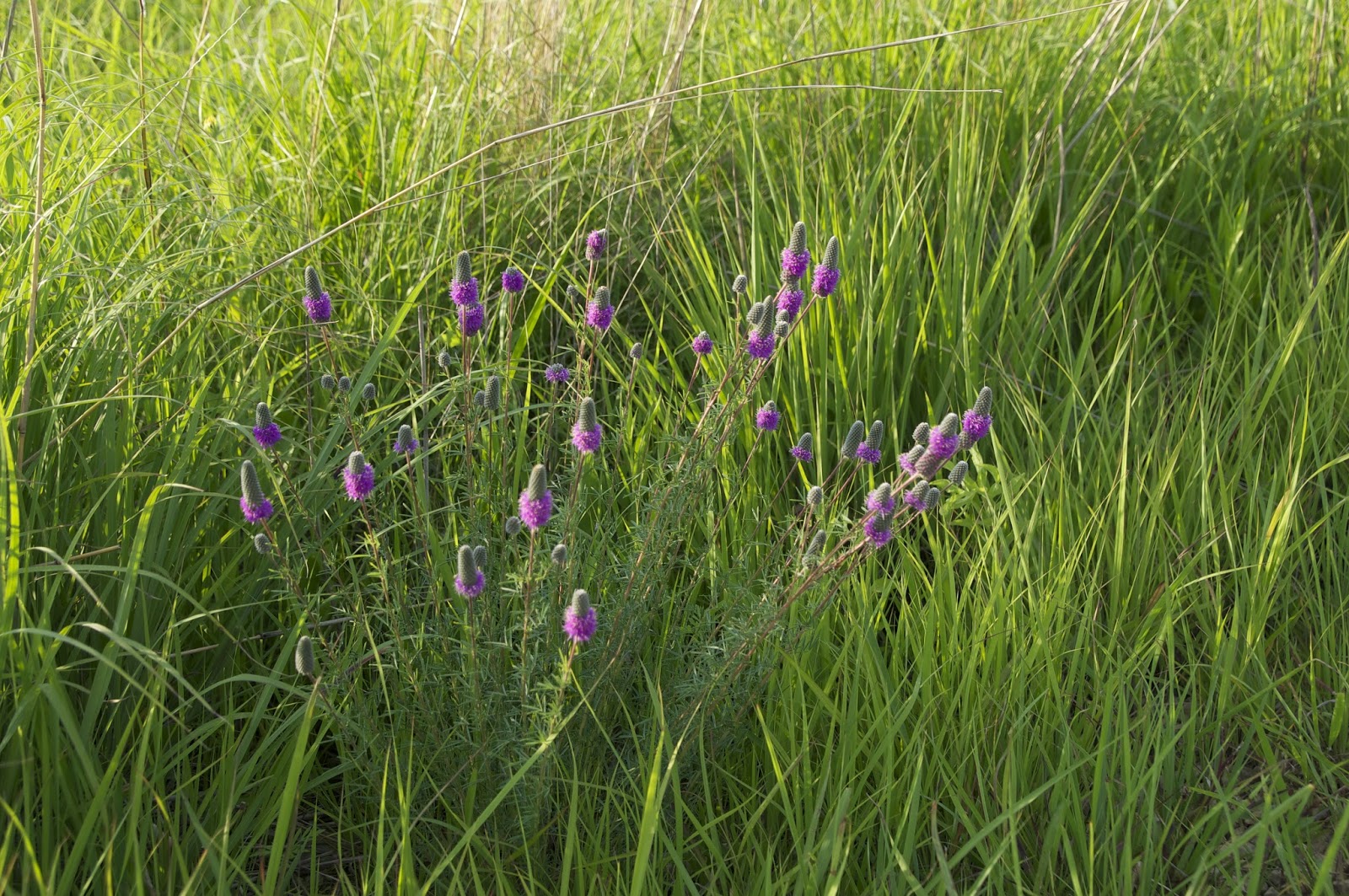
The image below is not mine, and comes from here.
Saturday, September 6, 2014
Controlled burn planned for fall of 2014.
Our two hives are at the edge of our ~40 acres of restored prairie. This fall, we plan to do a controlled burn of the prairie. To minimize property damage, fatalities, and other catastrophe, the fine folks at Prairie Restorations, Inc. will be helping us.
Bees died over the winter of 2013 - 2014.
The 2013 - 2014 winter in Minnesota was a tough one for bees and certainly for my two hives; they both died. In late December, we think that we saw evidence of cleansing flights, and I saw live bees in the hive when I looked through the top open hole.
But, come spring, both hives were dead. When we opened each hive, we could see bees next to capped honey. They died "head down" in the cell as if they were trying to get the last bit of honey out of the cell. The mite counts were low going into the winter, and I saw no evidence of disease of infestation. So, it may be that the cold was just too much for the cluster of bees to move to new areas of honey.
In the spring/summer, we harvested the honey. There wasn't a great deal of it, so we used the crush and strain method with a household stainless steel mesh strainer. The harvest is below.
We also used a double-boiler to melt and purify the wax. We now have about 2 pounds of pure beeswax. (No picture currently available.) There are still fine bits of wax in the honey. We eat it this way. But, before we give it to others, we have been using 4 layers of cheesecloth as a final straining.
But, come spring, both hives were dead. When we opened each hive, we could see bees next to capped honey. They died "head down" in the cell as if they were trying to get the last bit of honey out of the cell. The mite counts were low going into the winter, and I saw no evidence of disease of infestation. So, it may be that the cold was just too much for the cluster of bees to move to new areas of honey.
In the spring/summer, we harvested the honey. There wasn't a great deal of it, so we used the crush and strain method with a household stainless steel mesh strainer. The harvest is below.
| Honey from hives A and B (mixed) before final straining. |
We also used a double-boiler to melt and purify the wax. We now have about 2 pounds of pure beeswax. (No picture currently available.) There are still fine bits of wax in the honey. We eat it this way. But, before we give it to others, we have been using 4 layers of cheesecloth as a final straining.
Sunday, September 1, 2013
Varroa mite counting, round 4.
On 8/3/2013 at 1310, I removed the sticky board from beneath each hive. The boards had been in for about 2.5 days. Unfortunately, I lost track of specifically when I placed the boards.
Hive A had 17 - 19 mites on the board. When I removed the boards, I scraped off some Vaseline and (likely) mites. So, I estimated the number of mites that might have been in the ninth of the board to be 3 instead of the 1 that I counted. Hence, I'm going to go with the higher number.
Hive B had 33 mites on the board. One reference that I recall said that greater than 40 mite (in one day, mind you) was another indication for treatment. I'm still below that number, at least. In any event, I continue with the mites per 1,000 bees per day calculations below.
On 6/16/2013, Hive A had a population of about 9,375 bees (7.5 frames full of bees x 1,250 bees per full frame). On the same date, Hive B had a population of about 12,500 bees (10 frames full of bees x 1,250 bees per full frame). Again, we are going to say that this is over 4 days of collection.
Even if the boards were only in for one day--and thus the mite numbers would be 0.12 and 0.8 mites per thousand bees per day--there would not be a clear indication to treat.
After this mite count, I did not get to a mite count for over a month. I did an about 2.5-day mite count that ended on 8/3/2013. There were significantly more mites, but there were also significantly more bees. I'm hoping to do an inspection over the weekend of 8/3/2013 so that I can get a good estimate of numbers of bees.
Hive A had 17 - 19 mites on the board. When I removed the boards, I scraped off some Vaseline and (likely) mites. So, I estimated the number of mites that might have been in the ninth of the board to be 3 instead of the 1 that I counted. Hence, I'm going to go with the higher number.
Hive B had 33 mites on the board. One reference that I recall said that greater than 40 mite (in one day, mind you) was another indication for treatment. I'm still below that number, at least. In any event, I continue with the mites per 1,000 bees per day calculations below.
On 6/16/2013, Hive A had a population of about 9,375 bees (7.5 frames full of bees x 1,250 bees per full frame). On the same date, Hive B had a population of about 12,500 bees (10 frames full of bees x 1,250 bees per full frame). Again, we are going to say that this is over 4 days of collection.
- Hive A: 1 mite per 9,375 bees per 4 days = 1/(9,375 x 4) = 0.03 mites per 1,000 bees per day.
- Hive B: 10 mites per 12.5k bees per 4 days = (1/12,500 x 4) = 0.2 mites per 1,000 bees per day.
Even if the boards were only in for one day--and thus the mite numbers would be 0.12 and 0.8 mites per thousand bees per day--there would not be a clear indication to treat.
After this mite count, I did not get to a mite count for over a month. I did an about 2.5-day mite count that ended on 8/3/2013. There were significantly more mites, but there were also significantly more bees. I'm hoping to do an inspection over the weekend of 8/3/2013 so that I can get a good estimate of numbers of bees.
Saturday, August 3, 2013
Varroa mite counting, round 3.
On 6/20/2013 (this makes this post somewhat out of order), I removed the sticky board from beneath each hive. The boards had been in for about 4 days. Unfortunately, I lost track of when I placed the boards, but I did note that I removed them on 6/20/2013 at 1750.
Hive A had only 1 mite on the board. Hive B had 10 mites on the board. On 6/16/2013, Hive A had a population of about 9,375 bees (7.5 frames full of bees x 1,250 bees per full frame). On the same date, Hive B had a population of about 12,500 bees (10 frames full of bees x 1,250 bees per full frame). Again, we are going to say that this is over 4 days of collection.
So, from the numbers above, I feel that I am comfortable not treating for mites at this time. The quote that I am following, you might recall, is the following: "If your sticky board count shows more than 2 mites per thousand bees per day in mid-August or more than 4 mites per thousand bees per day in September, you should find a way to reduce the mite population."
Even if the boards were only in for one day--and thus the mite numbers would be 0.12 and 0.8 mites per thousand bees per day--there would not be a clear indication to treat.
After this mite count, I did not get to a mite count for over a month. I did an about 2.5-day mite count that ended on 8/3/2013. There were significantly more mites, but there were also significantly more bees. I'm hoping to do an inspection over the weekend of 8/3/2013 so that I can get a good estimate of numbers of bees.
Hive A had only 1 mite on the board. Hive B had 10 mites on the board. On 6/16/2013, Hive A had a population of about 9,375 bees (7.5 frames full of bees x 1,250 bees per full frame). On the same date, Hive B had a population of about 12,500 bees (10 frames full of bees x 1,250 bees per full frame). Again, we are going to say that this is over 4 days of collection.
- Hive A: 1 mite per 9,375 bees per 4 days = 1/(9,375 x 4) = 0.03 mites per 1,000 bees per day.
- Hive B: 10 mites per 12.5k bees per 4 days = (1/12,500 x 4) = 0.2 mites per 1,000 bees per day.
So, from the numbers above, I feel that I am comfortable not treating for mites at this time. The quote that I am following, you might recall, is the following: "If your sticky board count shows more than 2 mites per thousand bees per day in mid-August or more than 4 mites per thousand bees per day in September, you should find a way to reduce the mite population."
Even if the boards were only in for one day--and thus the mite numbers would be 0.12 and 0.8 mites per thousand bees per day--there would not be a clear indication to treat.
After this mite count, I did not get to a mite count for over a month. I did an about 2.5-day mite count that ended on 8/3/2013. There were significantly more mites, but there were also significantly more bees. I'm hoping to do an inspection over the weekend of 8/3/2013 so that I can get a good estimate of numbers of bees.
Thursday, August 1, 2013
Adding a box and brief inspection, on July 7, 2013.
Fifth inspection of Hive A and Hive B, Sunday, 7/7/13:
This was day 64 for the two hives, with the packages having been installed Saturday the 4th of May, 2013. The main goals for this inspection were:
Anyway, we could have done a full inspection today, but it was pretty darn hot... Three factors weighed heavily on my mind and kept me moving quickly:
For this inspection, I was worried that I had let too much time pass between inspections. I was most concerned that I would find that the bees had filled all available space and I was wasting their time and resources by not providing them enough space. The boxes were quite full, but not completely full; the bees still had room to expand. But, I would not have wanted to wait much longer to add the 3rd box.
- Enlarge each hive's entrance by moving the entrance reducer to the larger of its two settings; and,
- Add a third box to each hive.
![]() |
| The hives before inspection and adding third box. |
In the picture above, you see that there are three boxes. Recall that A3 and B3 are empty of frames and only hold the syrup pail. Only A1/A2 and B1/B2 are full of frames, bees, and comb.
Regarding the entrance reducer... If I was using deep hive bodies, I would open up the entrance more when I added the 2nd of 3 total boxes. So, I figured that I would do that step when I added my 3rd of 5 total boxes. I think that I could have removed the entrance reducer completely. This may have helped the bees keep their hive cooler. However, since the would also have uncorked holes in the 1st and the 2nd boxes of each hive, I opted to leave the entrance reducer in place but to the more open setting.
- The bees were hot and jumpy. I wanted to bother them as little as possible.
- The heat was oppressive. The beekeeping suits only worsened our sweaty plight.
- My videographer was being attacked by mosquitos. She was throwing off palpable waves of anger that assaulted me much more forcefully than the heat was...
For this inspection, I was worried that I had let too much time pass between inspections. I was most concerned that I would find that the bees had filled all available space and I was wasting their time and resources by not providing them enough space. The boxes were quite full, but not completely full; the bees still had room to expand. But, I would not have wanted to wait much longer to add the 3rd box.
Flowers and bees on flowers.
Our prairie and homesite has many flowers for the bees...
![]() |
| Common Milkweed in bloom |
![]() |
| Large patch of Blackeyed Susans |
![]() |
| Honeybee on Blackeyed Susan |
![]() |
| Honeybee on Blackeyed Susan, closer |
![]() |
| Purple Prairie Clover |
![]() |
| Purple Prairie Clover, closer |
![]() |
| Prairie False Indigo in bloom |
![]() |
| Prairie False Indigo in fruit |
![]() |
| Closer view of Prairie False Indigo fruit |
![]() |
| Blue Vervain or Hoary Vervain, not sure which... |
First inspection with two boxes on each hive, part 2.
Fourth inspection of Hive A and Hive B, Sunday, 6/16/13:
[Note: This is follow-up to the July 7, 2013 post, with video links below.]
To recap, this was day 43 for the hives, with the packages having been installed Saturday the 4th of May, 2013. We were able to do a full inspection today, as the weather was in the mid-70's. The inspection started at about 1820. There were two boxes on each hive, and I felt a bit more rushed for time. But, overall it went well. Inspection ended at 1850.
The videos (part 1 and part 2) tell most of the tale. It was fun to see the bees moving into their second box and drawing out more comb. With how much wax they were making (and how little syrup they were taking in), they were clearly finding a great deal of nectar in the wild.
To recap, this was day 43 for the hives, with the packages having been installed Saturday the 4th of May, 2013. We were able to do a full inspection today, as the weather was in the mid-70's. The inspection started at about 1820. There were two boxes on each hive, and I felt a bit more rushed for time. But, overall it went well. Inspection ended at 1850.
The videos (part 1 and part 2) tell most of the tale. It was fun to see the bees moving into their second box and drawing out more comb. With how much wax they were making (and how little syrup they were taking in), they were clearly finding a great deal of nectar in the wild.
Subscribe to:
Posts (Atom)